
Heat Pump & Ductless Mini-Split Installation in New Hampshire
• Cold-Climate Heat Pumps
• Ducted & Ductless Mini-Splits
• Free Estimates
• Fully Licensed & Insured


Get a Free Heat Pump Estimate
Find out whether a cold-climate heat pump or ductless mini-split is right for your home. Call now or book online to schedule a free estimate.
 Call 603-777-7749
 Based in Brentwood, NH

Cold-Climate Heat Pump and Ductless Mini-Split Installation Across New Hampshire
A heat pump heats and cools your home with one system. Courtesy Heating and Cooling is based in Brentwood, and we install heat pumps and ductless mini-splits for homeowners in Portsmouth, Dover, Manchester, Nashua, Wolfeboro and the other towns listed below. Some homeowners want to cut back on oil or propane. Some need air conditioning in a house that has never had it. Others want a cold bedroom over the garage to finally feel comfortable. In each case we help you work out whether a heat pump makes sense and design a system that suits your home.
Ready to talk it through? Call (603) 777-7749 or use the Schedule An Appointment button above to book a visit.
How Cold-Climate Heat Pumps Work in New Hampshire Winters
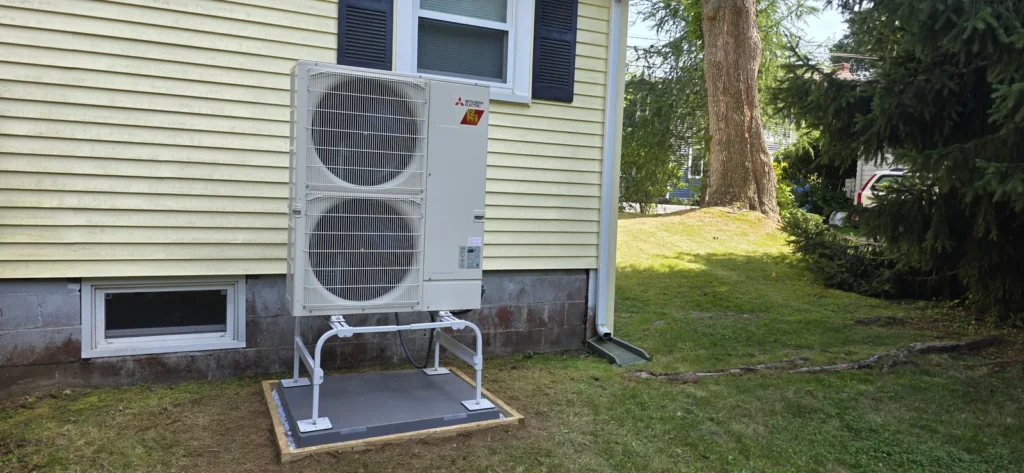
A heat pump doesn’t burn fuel to make heat. It moves heat. Even on a cold day, outdoor air holds heat energy. The outdoor unit pulls that heat in with refrigerant, compresses it to raise its temperature, and sends it inside, where an indoor unit or air handler spreads it through your rooms. In summer the process runs in reverse: the system takes heat out of your home and releases it outdoors, so it works as an air conditioner.
Older heat pumps had a reputation for struggling in northern winters. Today’s cold-climate models use variable-speed (inverter) compressors that speed up and slow down to match demand. They don’t just switch on and off, so they can keep producing useful heat at much lower outdoor temperatures than earlier equipment. Every model is different, though, and New Hampshire does get stretches of severe cold. That’s why we look at each system’s rated low-temperature performance and design around your home’s real heating load.
Many homeowners keep their existing boiler or furnace as backup heat for the coldest nights. That’s often called a hybrid or dual-fuel approach. We can explain how a heat pump would work alongside the system you already have, and how the controls can decide which one runs.
Ducted vs. Ductless: Which Heat Pump Is Right for Your Home?
Ducted heat pumps
If your home already has ductwork in good condition, for example from a forced-air furnace or central air conditioning, a ducted heat pump can use those ducts to heat and cool the whole house. The indoor part is an air handler, often installed where your furnace or AC coil is now. Ducts have to be sized and sealed correctly for a heat pump to perform well, so we check the existing system before recommending this route.
Ductless mini-splits
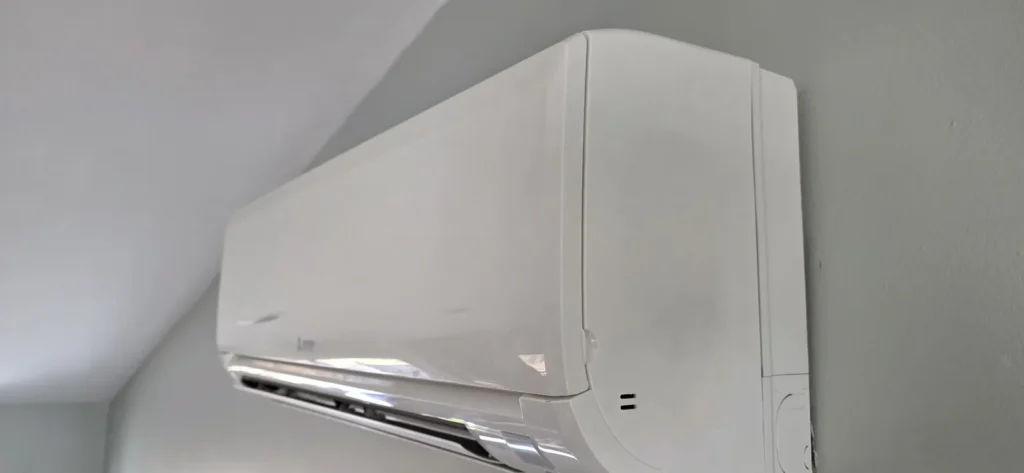
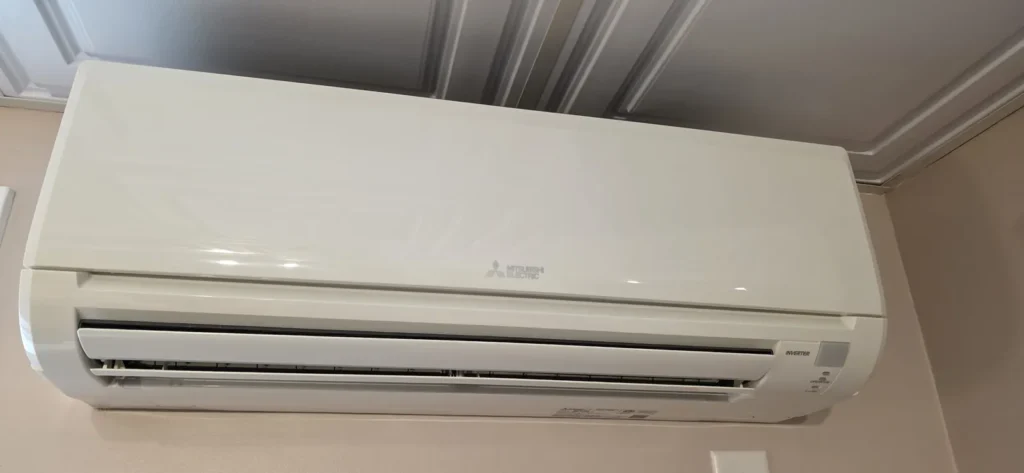
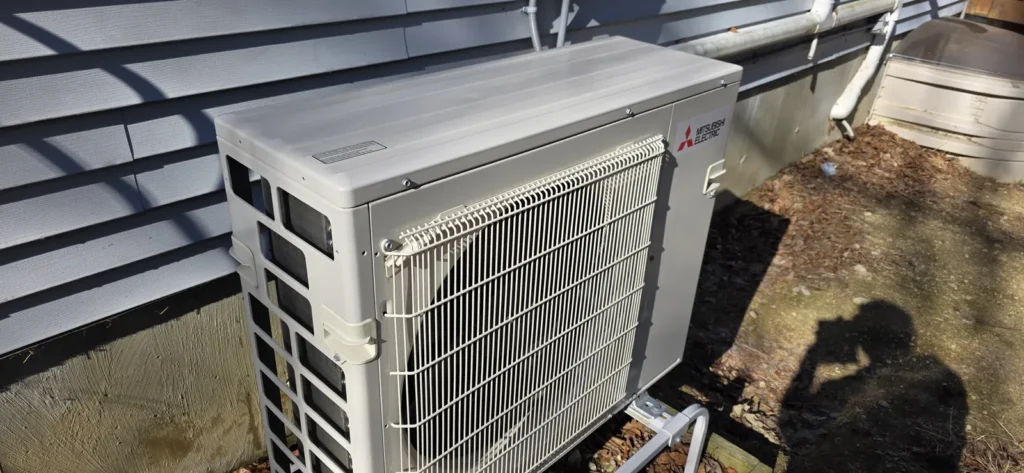
A ductless mini-split connects an outdoor unit to one or more indoor heads mounted on a wall or ceiling. Refrigerant lines and a condensate drain run through a small opening in the wall, so there’s no ductwork to install. Each indoor head serves its own zone with its own temperature setting. A single-zone system serves one area. A multi-zone system connects several indoor heads to one outdoor unit.
When a Ductless Mini-Split Makes Sense
- Additions, finished basements and bonus rooms: spaces your current heating system was never designed to reach.
- Older homes with boilers: many New Hampshire homes heat with hot water or steam and have no ducts at all. A mini-split adds efficient air conditioning and a second heat source without tearing open walls and ceilings.
- Room-by-room comfort: if one room always runs hot or cold, or family members want different temperatures, zoned mini-splits let you heat or cool only the spaces you’re using.
- Replacing window AC units: mini-splits run quietly, free up your windows, and give you heat in winter too.
- Garages, workshops and in-law apartments: separate spaces that need their own comfort control.
If your home already has good ductwork, a ducted system may be the better fit. Some homes do best with a mix of both. We’ll give you an honest recommendation either way.
What to Expect From Your Installation
1. In-home assessment and free estimate
A technician visits your home and looks at the rooms you want to heat and cool, your current heating system, your insulation and windows, your electrical service, and where the outdoor and indoor units can go. We also ask how you use each space and what comfort problems you’ve noticed.
2. Sizing and system design
Then we recommend equipment, number of zones and unit locations, and explain the reasoning. You get a clear written estimate before any work starts.
3. Installation day
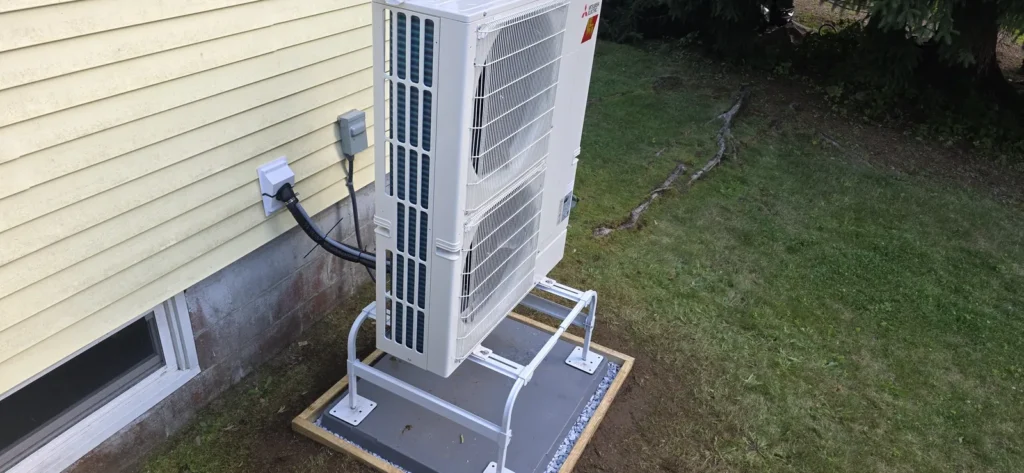
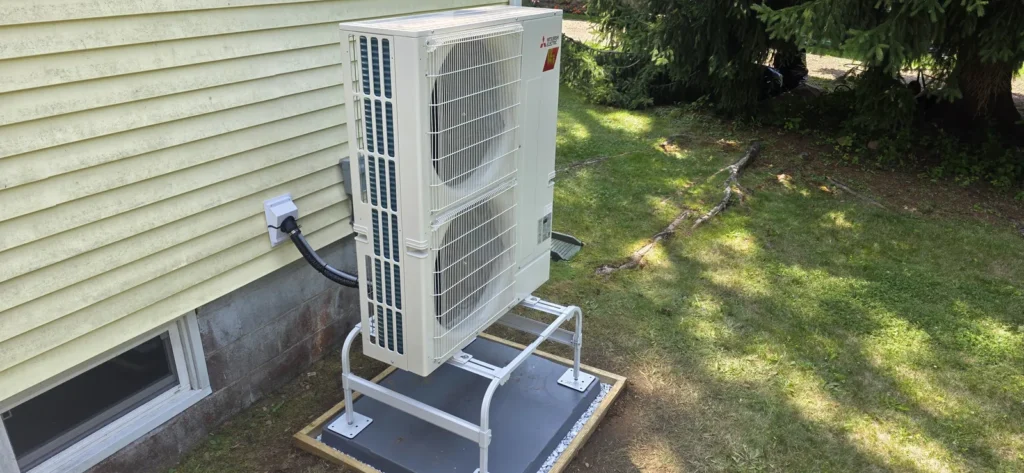
Our installers mount the outdoor unit on a pad or wall bracket that keeps it above snow, then mount the indoor units or air handler. They run and insulate the refrigerant lines, set up condensate drainage, and complete the electrical connections. We work carefully in your home and clean up when we’re done.
4. Startup, testing and walkthrough
Before we leave, we test the system in heating and cooling modes, check refrigerant and airflow, and set up the controls. We’ll also show you how to use the remote or thermostat, including settings that keep the system efficient through a New Hampshire winter.
Why Proper Sizing (Manual J) Matters
A heat pump that’s too big will short-cycle, control humidity poorly in summer, and cost more than it needs to. One that’s too small may not keep up on the coldest days. A Manual J load calculation is the industry-standard way to estimate how much heating and cooling each room actually needs. It looks at square footage, insulation, windows, air leakage, orientation and local design temperatures. Sizing from real numbers instead of guesswork is one of the biggest factors in how comfortable and efficient your new system will be.
Heat Pump Maintenance Tips
- Clean or check indoor filters regularly. Mini-split heads have washable filters, and dirty filters reduce airflow and efficiency.
- Keep the outdoor unit clear. After storms, clear snow and ice from around and on top of the unit, and keep leaves, shrubs and debris away from it.
- Don’t block indoor units. Furniture and curtains in front of a wall head disrupt airflow.
- Watch for warning signs. Unusual noises, ice that doesn’t clear after a defrost cycle, water leaks or uneven temperatures mean it’s time to call us.
- Schedule professional maintenance. Routine service, including coil cleaning, drain checks, electrical inspection and performance testing, helps your system run efficiently and last longer.
Rebates and Incentives
Qualifying heat pump installations may be eligible for rebates through NHSaves and for federal energy-efficiency programs. Eligibility and amounts depend on the program, the equipment and your utility, and they change over time. Ask us during your estimate and we’ll help you understand which programs may apply to your project.
Frequently Asked Questions
Can a heat pump really heat my home in a New Hampshire winter?
Cold-climate heat pumps are designed to keep producing heat at low outdoor temperatures, and many New Hampshire homes use them as a main heat source. How well one works in your home depends on the equipment, the house and the sizing. Some homeowners keep their existing boiler or furnace as backup for the coldest stretches. We’ll help you decide which approach fits.
Do I need ductwork for a heat pump?
No. Ductless mini-splits need no ducts. They connect indoor wall or ceiling units to an outdoor unit through a small opening in the wall. If you already have good ductwork, a ducted heat pump is another option.
Can I keep my boiler or furnace?
Often, yes. Many homeowners add a heat pump for efficient heating and air conditioning and keep their existing system as backup. We’ll look at your current equipment and explain how the two can work together.
How many indoor units will I need?
It depends on your floor plan, how open the spaces are and how much heating and cooling each area needs. A load calculation and walkthrough of your home tells us how many zones make sense.
How long does installation take?
Timing depends on the size and complexity of the job, such as the number of zones, line set routing and any electrical work. We’ll give you an expected schedule with your estimate.
Are there rebates for heat pumps in New Hampshire?
Rebates may be available through NHSaves, and federal programs may also apply. Ask us during your estimate and we’ll point you to the programs that may fit your installation.
Schedule Your Heat Pump or Mini-Split Estimate
Thinking about a heat pump? Courtesy Heating and Cooling can help you compare options and plan an installation built for New Hampshire’s climate. If you’re replacing a boiler or furnace, see our heating installation services. For air conditioning, visit our cooling page. You can also see the areas we serve.
Call (603) 777-7749 or contact us online to schedule your free estimate.
Already have a heat pump or mini-split? See heat pump repair, heat pump maintenance, mini-split repair and mini-split maintenance.
Prefer grilles instead of wall units? See ducted mini-split installation.
Some of Our Service Areas
Rockingham County
-
Atkinson
-
Brentwood
-
Candia
-
Chester
-
Danville
-
Deerfield
-
Derry
-
Epping
-
Fremont
-
Greenland
-
Hampstead
-
Hampton
-
Kingston
-
Londonderry
-
Newmarket
-
Newton
-
North Hampton
-
Northwood
-
Nottingham
-
Plaistow
- Portsmouth
Belknap County
- Alton
- Belmont
- Gilford
- Gilmanton
- Laconia
- Meredith
- New Hampton
- Sanbornton
Merrimack County
-
Boscawen
-
Bow
-
Epsom
-
Franklin
-
Henniker
-
Hooksett
-
Loudon
-
New London
-
Newbury
-
Northfield
-
Pembroke
-
Pittsfield
Hillsborough County
-
Amherst
-
Bedford
-
Brookline
-
Goffstown
-
Hillsborough
-
Hollis
-
Hudson
-
Litchfield
-
Merrimack
-
Milford
-
New Boston
-
Pelham
-
Peterborough